How to choose a furniture finish: walnut, oak and lacquer compared
Walnut is dark and strongly grained, oak is light and quiet, and lacquer is a flat surface with no grain at all. Walnut and oak are natural wood veneers where a scratch can be repaired; lacquer is a painted surface, and its repair covers a whole panel rather than a spot.
· Valentinos Luxury · 2 min read
Choosing a finish looks like a purely visual decision, but it has three practical consequences: how the surface ages, how a scratch gets repaired, and how bright the room stays. The three main options — walnut, oak and lacquer — differ under all three headings.
Walnut veneer
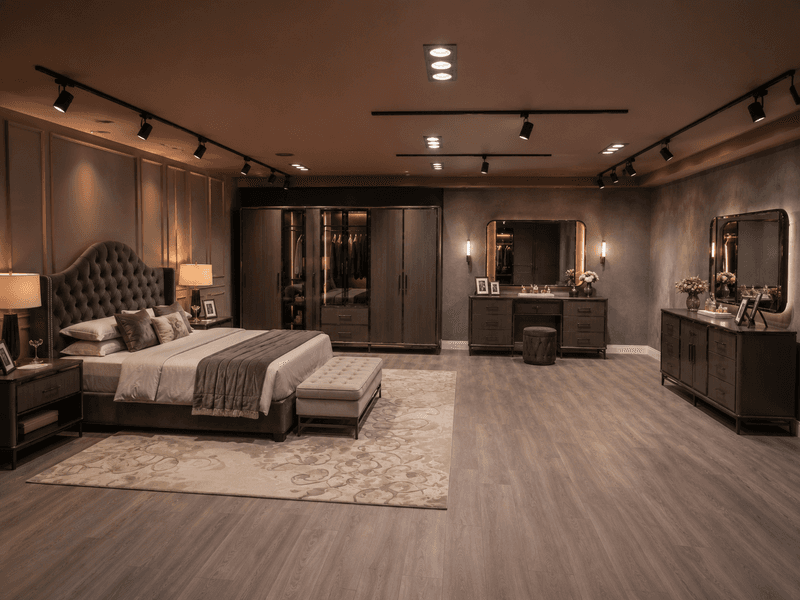
Walnut is a deep brown with a pronounced, wavy grain. Because the grain keeps the eye busy, it hides small scratches; it is the most forgiving surface in daily use.
It darkens slightly over time. On a surface in direct sun that darkening is uneven, and the part behind a curtain stays lighter. In sunny rooms we recommend curtains with walnut.
Being dark, it absorbs light. In a room under 12 m², a full-wall walnut wardrobe makes the room feel noticeably tighter; in such rooms walnut is best kept to the bed and bedside tables.
Oak veneer
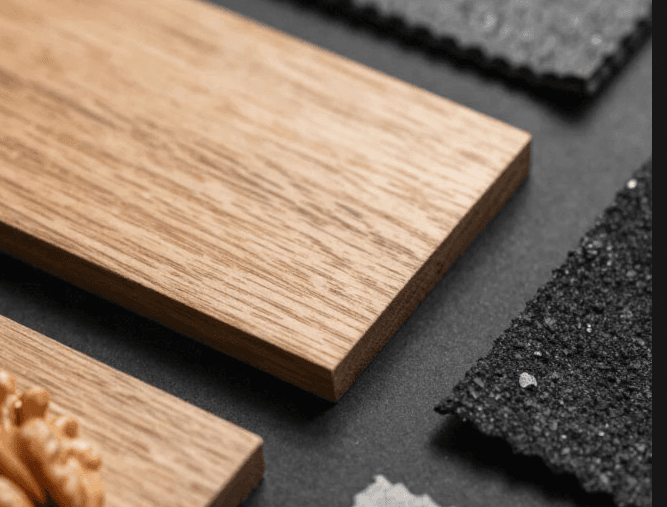
Oak is a light beige-yellow with a straight, quiet grain. It reflects light and makes small rooms feel larger. It is the most popular veneer for modern and Scandinavian-line sets.
Because the grain is quiet, scratches show more than on walnut. In exchange, oak is a harder timber and stands up to knocks better.
Oak yellows slightly with age. That is usually a wanted effect, and it progresses evenly across the whole surface.
Lacquered surfaces
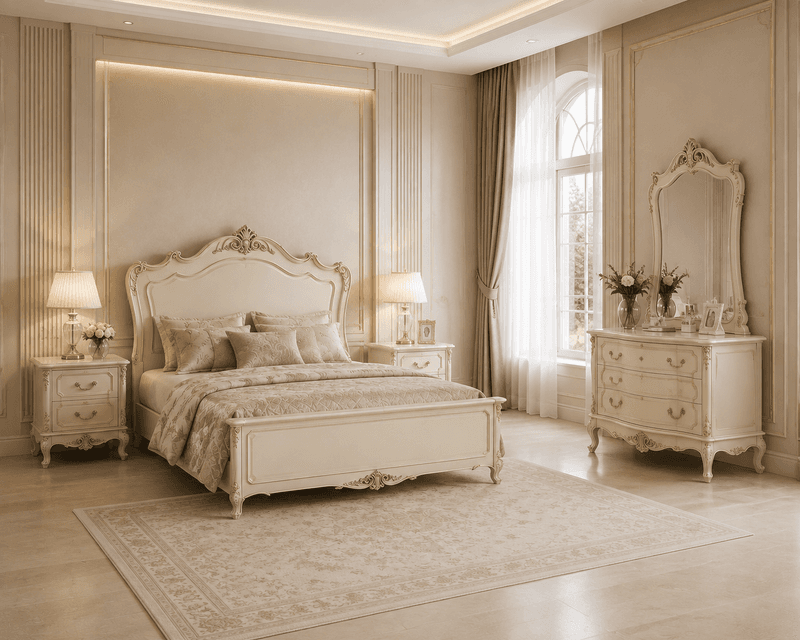
Lacquer is not a type of wood but a surface treatment: primer, sanding and colour coats are applied over an MDF carcass, with a clear coat on top. The result is a completely flat surface with no grain.
Lacquer comes in matt, satin and gloss. Gloss reflects, so it shows fingerprints and dust; on bedroom furniture in daily use we recommend matt or satin.
The most important difference with lacquer is repair. On wood veneer a scratch can be touched up locally; on lacquer a touch-up leaves a mark and the repair means respraying the whole panel. In exchange, lacquer gives colours wood cannot: off-white, grey, anthracite, pastels.
How long each one takes
In production time, walnut and oak veneer are the quickest; lacquer adds 1–2 weeks to the schedule because each coat has to dry before the next. Gilded lacquer takes longer still.
Three questions to decide
How many square metres is the room, and how much light does it get? In rooms under 12 m² and those facing north, oak or a light lacquer is the better choice.
Are there children or pets in the house? If so, a grained surface like walnut hides scratches better.
Are you after colour or texture? Lacquer for colour, wood veneer for texture.
The answers to those three questions become clear with samples in front of you at the showroom. Veneer samples should be judged in the hand, not on a screen; the same walnut looks different in different light.
Frequently asked
- Does lacquer scratch?
- It does. On wood veneer a scratch can be touched up locally; on lacquer a touch-up leaves a mark, so the whole panel is resprayed.
- Which finish suits a small room?
- Oak or a light-toned lacquer — both reflect light. Dark walnut makes rooms under 12 m² feel tighter.
- Does the finish change colour over time?
- Walnut darkens slightly and oak yellows slightly. On surfaces in direct sun that change is uneven; curtains reduce the difference.
- Can one set combine lacquer and wood?
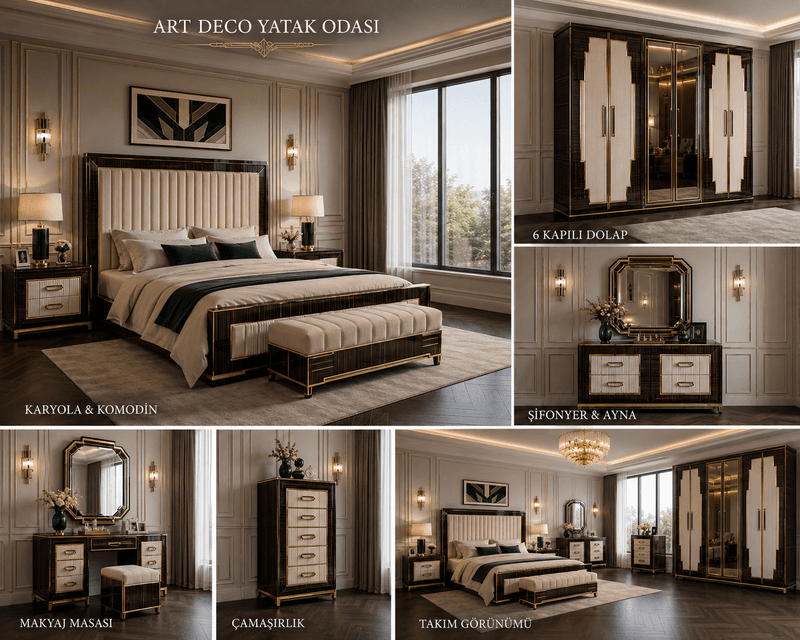
- It can, and it often is — a lacquered carcass with wood veneer doors and headboard, for instance. In a mixed scheme the two tones are chosen side by side at the showroom.