What is MDFLam? A comparison of furniture carcass materials
MDFLam is MDF board faced with melamine. It is denser than chipboard and holds screws better, and it is cheaper and more dimensionally stable than solid timber. In a carcass, thickness matters as much as material: the carcass should be 18 mm and the back panel at least 8 mm.
· Valentinos Luxury · 3 min read
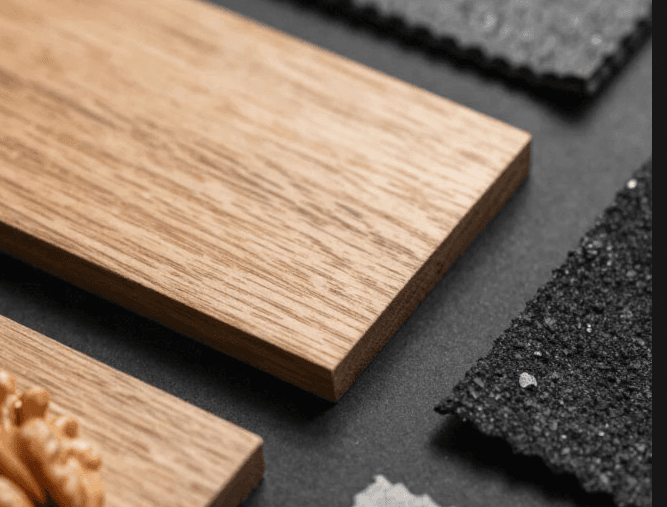
The face of a piece of furniture is the finish; the part that carries the load is the carcass. Choose the wrong carcass material, or thin it down, and the result shows within a few years: sagging shelves, doors drifting out of line, screw seats working loose.
MDF and MDFLam
MDF (medium-density fibreboard) is made by pressing wood fibres with resin under high pressure. It is homogeneous throughout; cut it and you see no voids or chips. That homogeneity gives two advantages: the cut edge comes out clean, and a screw grips the same at any point.
MDFLam is that board with melamine-resin decor paper pressed onto the surface. It needs no separate finishing step, resists scratching and moisture, and wipes clean. It is our standard choice for the internal carcasses of wardrobes and bedside units.
How it differs from chipboard
Chipboard is made by pressing wood chips; it is less dense than MDF and contains voids. The cut edge is rough and screw grip is less reliable than in MDF — particularly when a screw goes into the same seat a second time and works loose.
Chipboard is cheaper and lighter. It can be used for back panels that are never seen and for sections carrying little load, but MDF should be used wherever hinges and runners are fixed.
Where solid timber belongs
Solid timber is natural wood and the most durable option, but it moves with changes in humidity: it expands and contracts. Make a wide wardrobe door from solid timber and it will warp with the change of season. So solid timber goes not into large surfaces but into bed legs, frames, door mouldings and carved detail.
In our construction, the large surfaces are MDF or MDFLam and the structural and decorative profiles are solid. Using both together gives dimensional stability and durability at once.
Thickness — what really decides it
Carcass panels should be 18 mm. 16 mm is the acceptable limit; go below it and sagging shelves and loose screws are inevitable.
The back panel should be at least 8 mm. Three-millimetre back panels are common on the market; that thickness cannot stop the carcass racking, and the wardrobe skews into a parallelogram over time. Ours is 8 mm veneered, and it seats into a groove in the carcass rather than being pinned on from behind.
Shelves should be 18 mm thick and no more than 90 cm wide. Wider shelves get a support profile underneath.
Edge banding and moisture
Every cut edge must be banded. An unbanded edge takes up moisture, the board swells, and it does not go back. This matters most in units next to a bathroom or an external wall.
Banding is applied at 2 mm on visible surfaces and 0.8 mm internally. A 2 mm band takes knocks and does not lift at the corner.
Four questions to ask
When comparing furniture quotes, ask: how many millimetres is the carcass panel, how many is the back panel and how is it fixed, which brand are the hinges and runners, and how thick is the edge banding. Those four answers reveal the real difference between two products that look identical.
For us, those four headings are part of the 24-point checklist and are ticked off individually on every piece before it ships.
Frequently asked
- Is MDF safe? Does it contain formaldehyde?
- The boards we use meet the E1 emission class; formaldehyde release is below the limit set for indoor use. E1 is the standard required for home furniture in Europe.
- Why should the back panel be 8 mm?
- The back panel is what stops the unit racking. A 3 mm panel cannot do that job and the wardrobe skews over time. An 8 mm panel seated into a groove holds the carcass square.
- Can a wardrobe be made from solid timber?
- It can, but wide solid doors warp with changes in humidity. That is why we use MDF for large surfaces and solid timber for frames and profiles.
- What is the difference between MDFLam and lacquer?
- MDFLam is a melamine surface pressed onto the board at the factory. Lacquer is a coat of paint applied in the workshop. Lacquer gives you any colour you want; MDFLam is limited to the decor catalogue but scratches less and costs less.